
Buckhorn Wilderness, August 2020.
Goat Lake Trail and my First Foray into the PNW Wilderness
Zero preparation. A decade without exercise. Camping with one of my best mates, and an alpine lake so pristine it made me fall in love with the Pacific Northwest forests for good.
August 27, 2020
- Mountain
- Goat Lake
- Type
- Backpacking
- Location
- Buckhorn Wilderness, Olympic Mountains, WA
- Duration
- 2 day
- Conditions
- Clear skies, late summer, alpine lake in full glory
There are trips that are impressive on paper and trips that change something in you. Goat Lake was neither technical nor epic, but it embodied the American backpacking experience and planted a seed. It was an overnight hike with a new mate (Jeremy) into a wilderness I knew nothing about, and it rearranged the furniture in my head in a way that hasn’t shifted since.
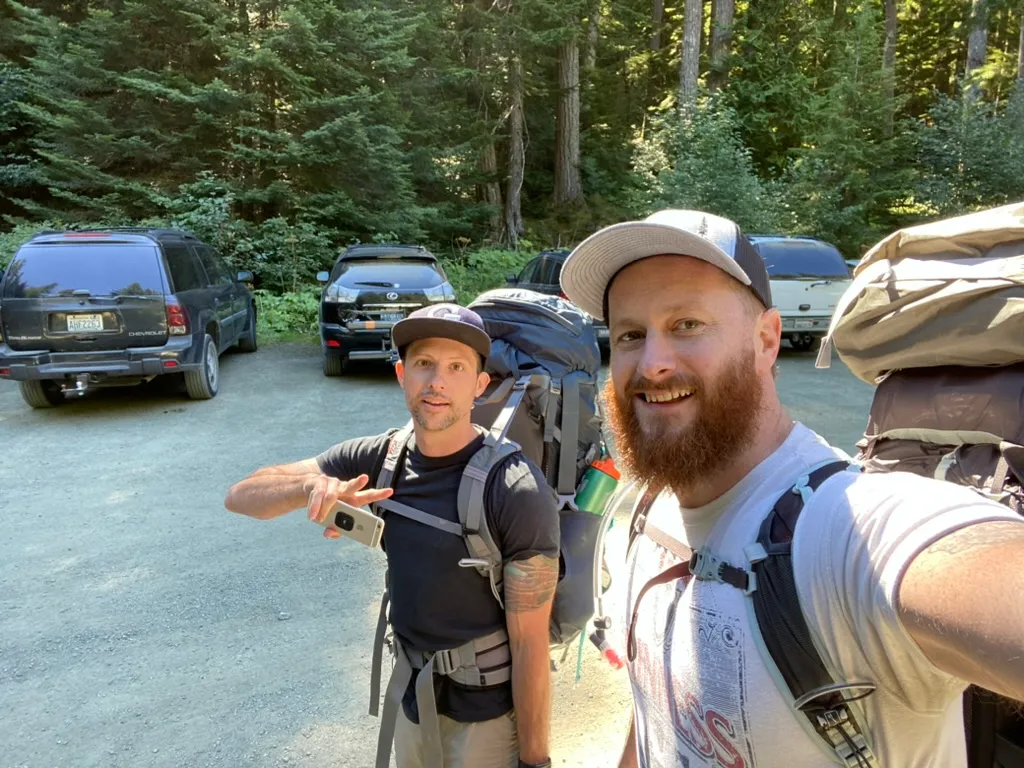
I was not in any condition to climb a mountain. It had been over a decade since I’d played any sports or done any real exercise. I was overweight, soft, and put in zero preparation for this. I barely looked at a map, Jeremy picked the trail, drove us both out there, and I was hooked.
Shinrin-yoku in Siletzia
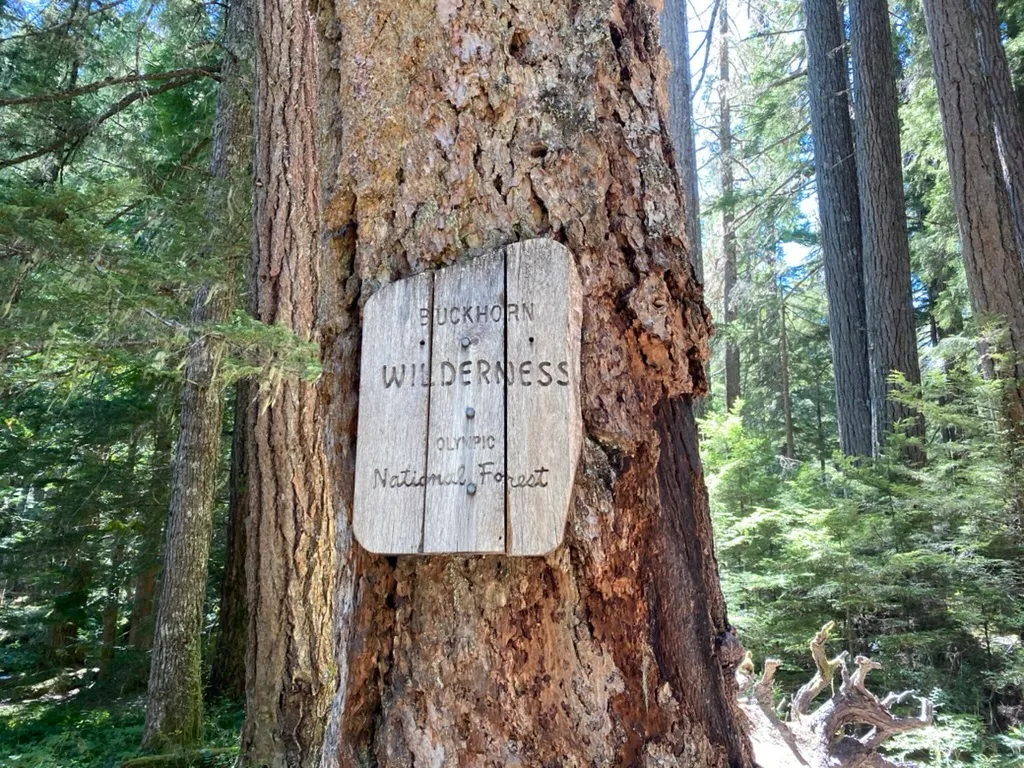
Shinrin-yoku is a Japanese practice of immersing oneself in nature using all senses to improve your mental and physical health. The forest hit me first — the scale, the silence, the way the light came through in columns between the old trees. Goat Lake lies in the Buckhorn Wilderness, an ecosystem defined by a drier, subalpine climate situated within the rain shadow of the Olympic Mountains, where the dense, moss-draped rainforests of the west give way to rugged rock faces and towering stands of Douglas fir, Western red cedars and Western hemlock. Ancient is the word that comes to mind. There’s a density to the lower forest, an indifference. They’ve been here a long time and they’re not particularly interested in you.
According to Nick on The Rocks (Nick Zentner, a geologist at Central Washington University), the Olympic Peninsular is an “exotic terrane”, an ancient pacific island which arrived with such force that it essentially broke the existing tectonic machinery. Zentner highlights that before Siletzia arrived, the edge of the North American continent was much further inland, near the present-day Washington-Idaho border. When this “beefy” plateau jammed the subduction zone, it forced the oceanic trench to jump nearly 100 miles westward to its current position, permanently expanding the Pacific Northwest and leaving behind the thick basalt foundation that now sits beneath the Olympic Mountains and the Willamette Valley.
As my lungs and legs protested the steep gradient, I found myself sitting on a rock, caught between physical exhaustion and the ancient pull of the forest. I fell into a meditative trance of ancient indifference, the trees offered a strange clarity. I wasn’t just climbing a trail; I was traversing the rugged basalt bones that jammed the subduction zone 50 million years ago. The primeval energy of this prehistoric landmass turned a grueling physical struggle into a definitive moment of discovery.
The Lake
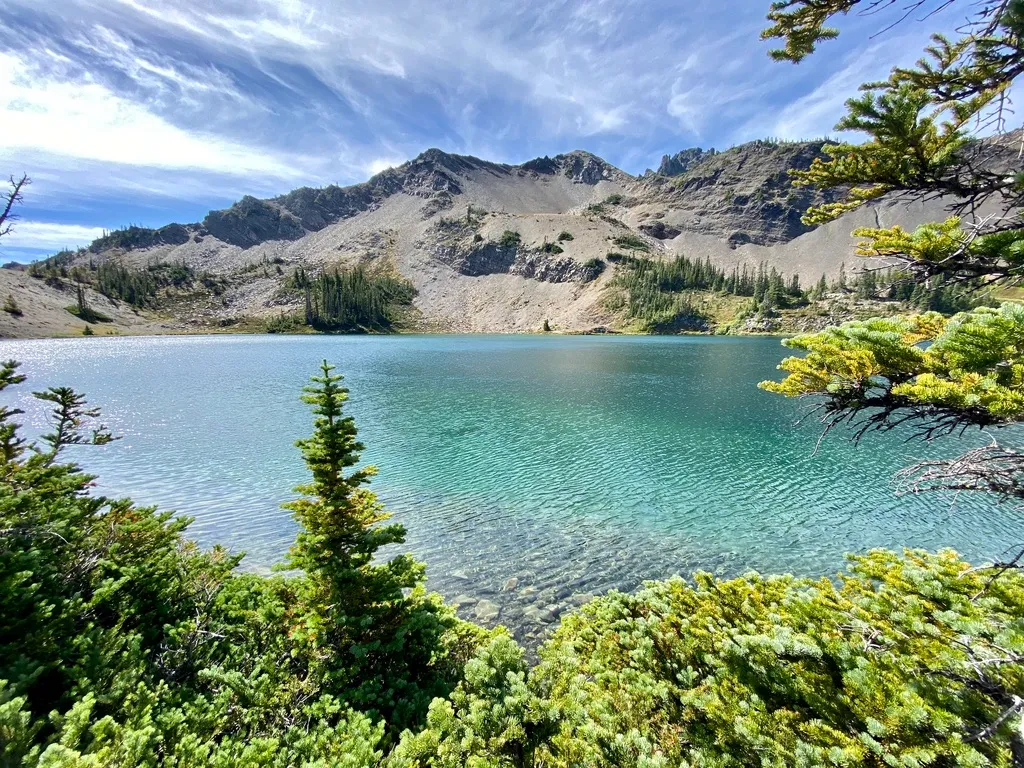
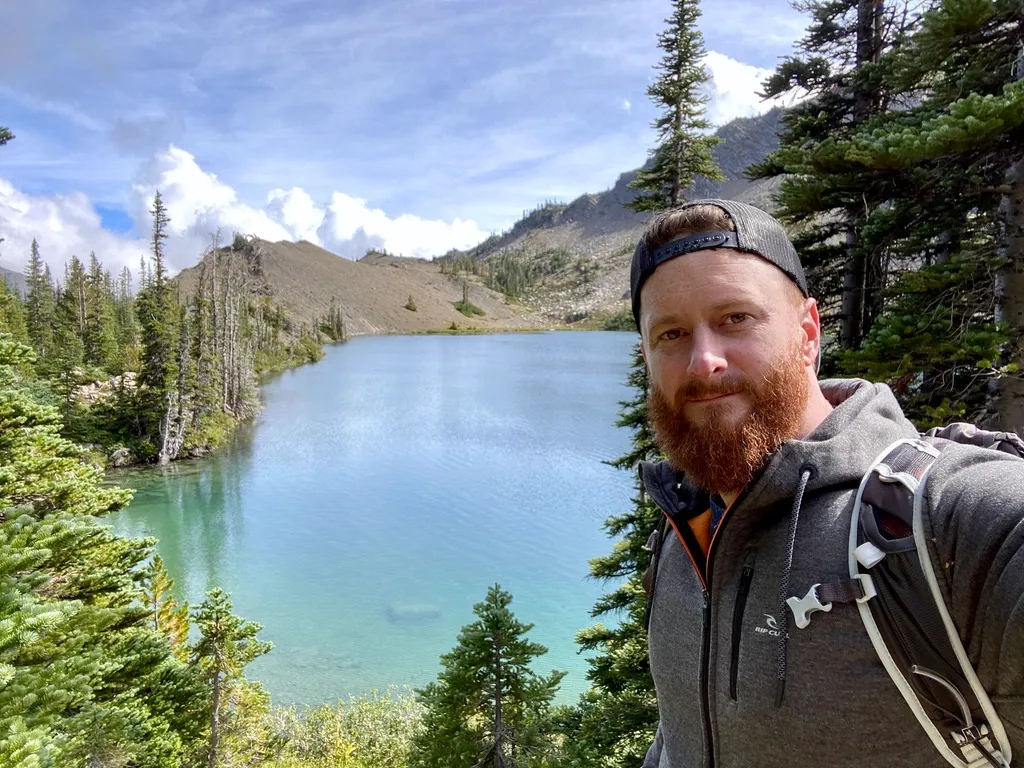
Goat Lake sits in a bowl in the Buckhorn Wilderness at around 4,000 feet. We came over a rise and there it was — one of those moments where you stop walking because your brain needs a second to process what you’re looking at.
Crystal clear, deep blue, ringed by peaks. Late August, and the snow on the surrounding ridges had pulled back to reveal the raw rock underneath. We swam, and I remember lying there looking up at the sky and thinking that this was probably something I should have been doing all along.
What It Started
Driving back to Bainbridge with aching legs and a specific feeling that I’ve been chasing in various forms ever since. Not the feeling of having done something impressive — this was a moderate trail, the kind families do on weekends. The feeling of having been somewhere that asked something of me, and of having answered.
Goat Lake is where it started. I don’t think I’d be climbing mountains now if we hadn’t done that one unprepared hike into the Buckhorn Wilderness in August 2020.
That lake is still the most perfectly placed piece of water I’ve ever swum in.
Filed under
Loading comments…